Dallas service guide
Dallas Demolition Contractors
When an old building, house, slab, pool, or interior space needs to come out, the demolition is only part of the job. The work also has to be planned around permits, utilities, neighbors, access, debris, hazardous materials, grading, and what you want to do with the property afterward.
DALLAS SERVICE GUIDEScope planning
 Define the handoffScope · access · next phase
Services in this guide
Demolition services in Dallas
The right demolition method depends on the structure, location, materials, access, and next phase of construction. Our service categories include:
Commercial and industrial building demolition
Interior and selective demolition
Concrete, slab, driveway, and foundation removal
In-ground pool demolition and fill-in
Garage, shed, fence, and accessory-structure removal
Site clearing and debris hauling
Excavation, grading, and post-demolition preparation
A small backyard structure may need a different crew and equipment plan than a commercial building near an active road. The page for each service explains the details, while this hub helps you find the right starting point.
The decision point
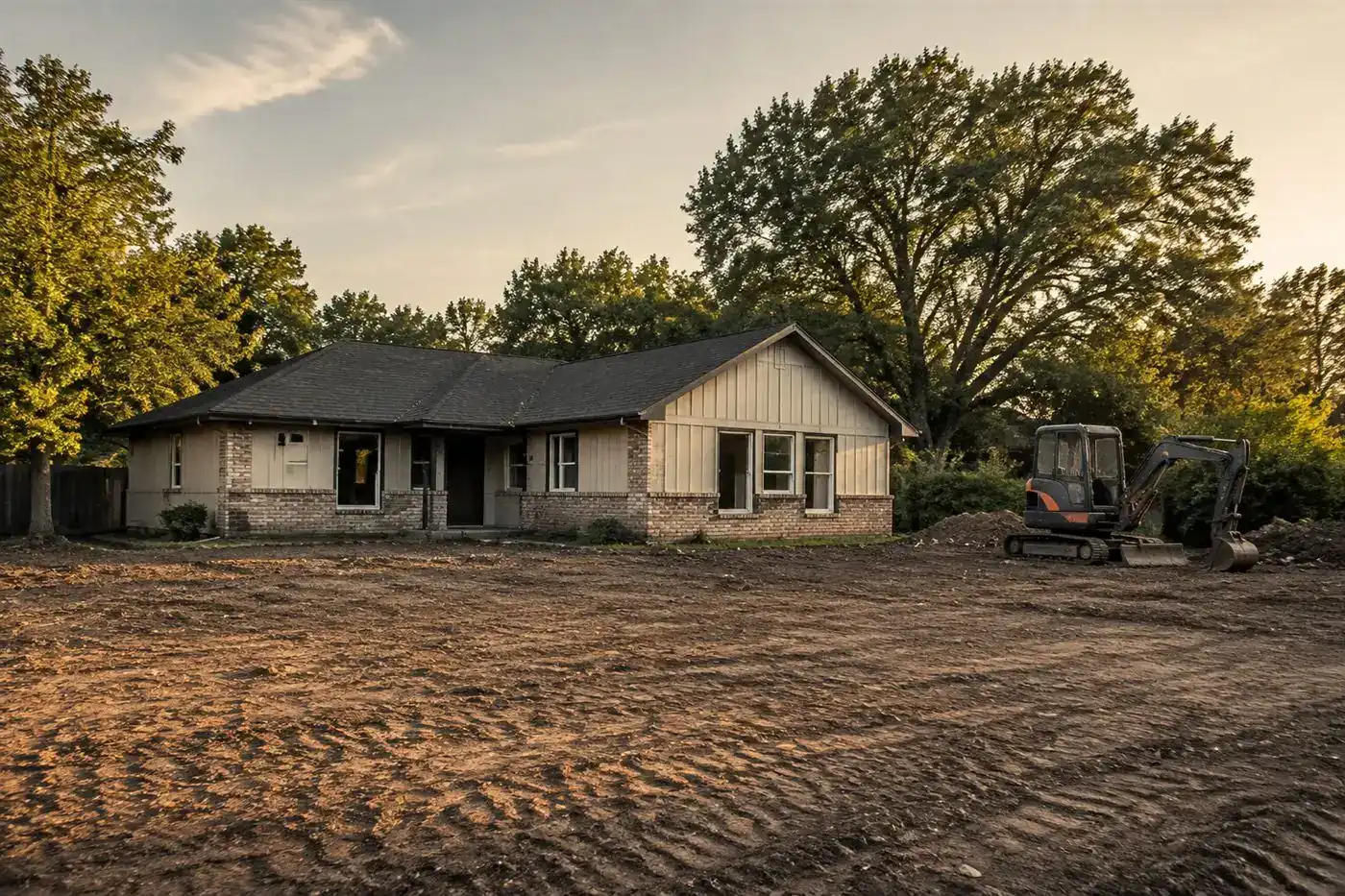
House demolition
Before demolition, the property should be reviewed for:
After the structure is down, debris is sorted, loaded, hauled, and disposed of or recycled. If the property is going to be rebuilt, the final excavation and grading plan should be discussed before the teardown begins.
Learn more about Dallas house demolition.
Utility connections and overhead lines
Access for excavators, loaders, and trucks
Neighboring structures and shared fences
Asbestos or other regulated materials
Trees, drainage, and erosion concerns
Foundation, basement, pool, or buried-obstruction removal
Required permits and inspection steps
The decision point
Commercial and industrial demolition
Commercial demolition requires coordination with owners, general contractors, engineers, utility providers, inspectors, and sometimes environmental specialists. The work may involve offices, retail buildings, warehouses, multifamily structures, industrial facilities, parking areas, or selected portions of an occupied property.
A commercial scope may include:
The bid should define demolition limits, working hours, protection requirements, temporary facilities, cleanup standards, and the condition required for turnover. For large sites, the demolition sequence must also protect access for other trades and keep stormwater and erosion controls in place.
Learn more about Dallas commercial demolition.
Building or structural demolition
Interior strip-outs
Concrete and pavement removal
Equipment or asset recovery
Utility disconnection and protection
Environmental testing and hazardous-material coordination
Traffic, dust, noise, and site-safety planning
Recycling, haul-off, and site preparation
The decision point
Interior and selective demolition
Interior demolition removes selected materials while preserving the parts of the building that remain. This may include cabinets, flooring, ceilings, partitions, finishes, plumbing fixtures, nonstructural walls, or mechanical and electrical components.
Selective demolition is common before:
The work should start with a clear demolition plan. Load-bearing walls, active utilities, fire-rated assemblies, sprinklers, and shared building systems need to be identified before removal. Dust control, debris routes, protection of occupied areas, and daily cleanup are often as important as the tear-out itself.
Retail and office remodels
Restaurant conversions
Tenant improvements
Residential renovations
MEP replacement
Structural alterations
Fire or water-damage restoration
The decision point
Concrete, slab, and driveway removal
Concrete removal may involve driveways, patios, sidewalks, parking areas, foundations, equipment pads, retaining features, or damaged slabs. The crew may use saw cutting, breakers, excavators, loaders, and hauling equipment based on the thickness, reinforcement, access, and surrounding improvements.
A complete concrete-removal estimate should identify:
Removing the concrete is not the same as preparing the ground for a new pour. If the area will receive a driveway, slab, building, or paving, the subgrade, drainage, base, and compaction requirements should be included in the next phase.
Learn more about Dallas concrete removal.
Exact removal limits
Reinforced concrete and rebar handling
Base or soil removal below the slab
Loading and haul-off
Recycling or disposal
Utility and irrigation protection
Backfill, grading, and restoration
Coordination with the replacement contractor
The decision point
Pool demolition and removal
An unused in-ground pool can limit the way a yard is used and create ongoing maintenance responsibilities. Pool work may include draining, removing the deck and coping, breaking or extracting the pool shell, hauling debris, backfilling, compacting, and final grading.
Homeowners generally compare:
Learn more about Dallas pool removal.
Partial removal or pool fill-in
Complete removal of the shell and associated material
Review the scope
Permits, utilities, and hazardous materials
Permit requirements depend on the property, municipality, project type, structure, public right-of-way, and materials being removed. The City of Dallas publishes demolition and excavation requirements, but surrounding cities may use different applications, inspections, and closeout procedures. The owner or contractor should confirm:
01
Which demolition or building permits apply
02
Who will obtain and close the permits
03
How water, gas, electric, sewer, and communications are disconnected
04
Whether a right-of-way permit is needed
05
Whether asbestos or other hazardous materials require testing or abatement
06
What inspections are required before backfill or final closeout
Demolition should not begin based on an assumption that utilities are inactive. Utility disconnection and field verification need to be documented before structural work starts.
The decision point
Debris removal, recycling, and site cleanup
Demolition creates more than visible building material. A site may contain concrete, brick, wood, metal, roofing, drywall, glass, fixtures, soil, vegetation, and buried debris. The proposal should explain what will be sorted, recycled, hauled away, or left on site.
Ask whether the price includes:
A clean site handoff is especially important when another contractor is scheduled to begin excavation, utilities, paving, or construction immediately after demolition.
Loading and trucking
Disposal or recycling fees
Concrete and metal separation
Hazardous-material handling
Dust suppression
Street or driveway cleanup
Final magnet sweep and debris pickup
Rough grading and temporary drainage
Review the scope
What affects demolition cost?
No responsible contractor can price every project from a single photograph. Cost is influenced by:
01
Building size, height, construction, and location
02
Concrete, steel, masonry, and foundation depth
03
Interior versus complete demolition
04
Access for equipment and trucks
05
Utility disconnections and protection
06
Hazardous-material testing or abatement
07
Traffic, neighbors, working hours, and site restrictions
08
Haul distance, disposal, and recycling
09
Backfill, grading, drainage, and restoration
10
Required permits, inspections, and documentation
A useful quote separates the base scope from allowances. It should state what is included, what is excluded, the expected schedule, the cleanup standard, and how concealed conditions will be handled.
Before you approve the work
What to send for an estimate
For a Dallas demolition estimate, send:
01
The property address.
02
Photos or video of the structure and surrounding access.
03
The type and approximate size of the building or improvement.
04
Whether you want full, partial, or selective demolition.
05
Any plans, surveys, inspection reports, or environmental information.
06
Known utilities, pools, basements, driveways, or buried structures.
07
Your target schedule and next construction phase.
08
Whether you need hauling, grading, or site preparation included.
09
Any neighborhood, HOA, tenant, traffic, or working-hour restrictions.
Confirm the current rule
The more clearly the demolition limits are defined, the easier it is to compare bids and avoid surprise work.
Common questions
Frequently asked questions
Clear answers for the first planning conversation, kept visible so the important context is never hidden behind a click.
Do I need a demolition permit in Dallas?
Many demolition projects require permits or approvals, but the exact requirements depend on the project and jurisdiction. Confirm the current requirements with the applicable city before work begins.
Can demolition include excavation and grading?
It can, if those services are included in the proposal. Demolition, debris removal, excavation, backfill, and final grading should be listed separately so the handoff is clear.
Can you remove only part of a building?
Yes. Selective demolition is used for remodels, tenant improvements, structural changes, and partial building removal. A demolition plan should identify what stays and how it will be protected.
How long does demolition take?
The schedule depends on the structure, permits, access, utility work, hazardous materials, weather, and debris volume. A site visit and defined scope provide a more useful schedule than a generic estimate.
Can you leave the lot ready to build?
The project can be scoped to include foundation or slab removal, debris haul-off, excavation, backfill, grading, and related preparation. Building-ready conditions may also require engineering, testing, utilities, and separate sitework.
The decision point
Request a Dallas demolition estimate
Send the address, photos, project type, demolition limits, access information, and your plans for the property. We can help identify the right demolition scope and explain what should be included for permits, utility coordination, debris removal, excavation, grading, and final cleanup.
Local context
What is specific
to this place?
LOCAL CONTEXT
Dallas is the primary city context for this page. Surrounding municipalities may use different permit, inspection, right-of-way, and closeout procedures. Dallas-specific requirements should be confirmed with the applicable city before work begins. Do not treat directory listings or contractor-submitted claims as endorsements.
Confirm current requirements for the specific property before work begins.Scope clarity
Know what the estimate is actually saying.
Use these boundaries to compare proposals on the same basis and confirm the final handoff.
What the working scope covers
- House and structure demolition; commercial and industrial scope guidance; interior/selective demolition; concrete, slab, driveway, and foundation removal; pool demolition; debris hauling; excavation, grading, and post-demolition preparation.
What needs its own line item
- Foundation engineering; asbestos or hazardous-material abatement; utility disconnection; permits and inspections; right-of-way work; unusual disposal or haul distances; backfill, compaction, drainage, landscaping, replacement construction, and concealed conditions unless separately scoped.
Conditions behind the plan
- Final scope depends on property condition, structure and material, access for equipment and trucks, utility status, permit requirements, hazardous-material review, haul-off, disposal, and the desired site handoff. Public cost guidance is directional only; final pricing requires contractor review.
Reference desk
Sources behind this guide.
Official references and project-specific starting points used to frame the page.
- 01
Dallas Building Inspection code directory — https://dallascityhall.com/departments/sustainabledevelopment/buildinginspection/Pages/code_directory.aspx
- 02
DallasNow permitting — https://dallascityhall.com/departments/sustainabledevelopment/Pages/DallasNow.aspx
- 03
Dallas right-of-way management — https://dallascityhall.com/departments/public-works/Pages/right-of-way-management.aspx
- 04
Texas811 utility locate guidance — https://www.texas811.org/
- 05
EPA asbestos guidance — https://www.epa.gov/asbestos
Next step
Ready to describe
the site?
Send the address, photos, access notes, project limits, and what should happen after the work is complete.
Request a Dallas demolition estimate matched to your project type
Planning guidance is not a binding quote. Complex conditions receive human review.
Open project intake →