Dallas service guide
Dallas Land Clearing for Lots, Acreage, and Build Sites
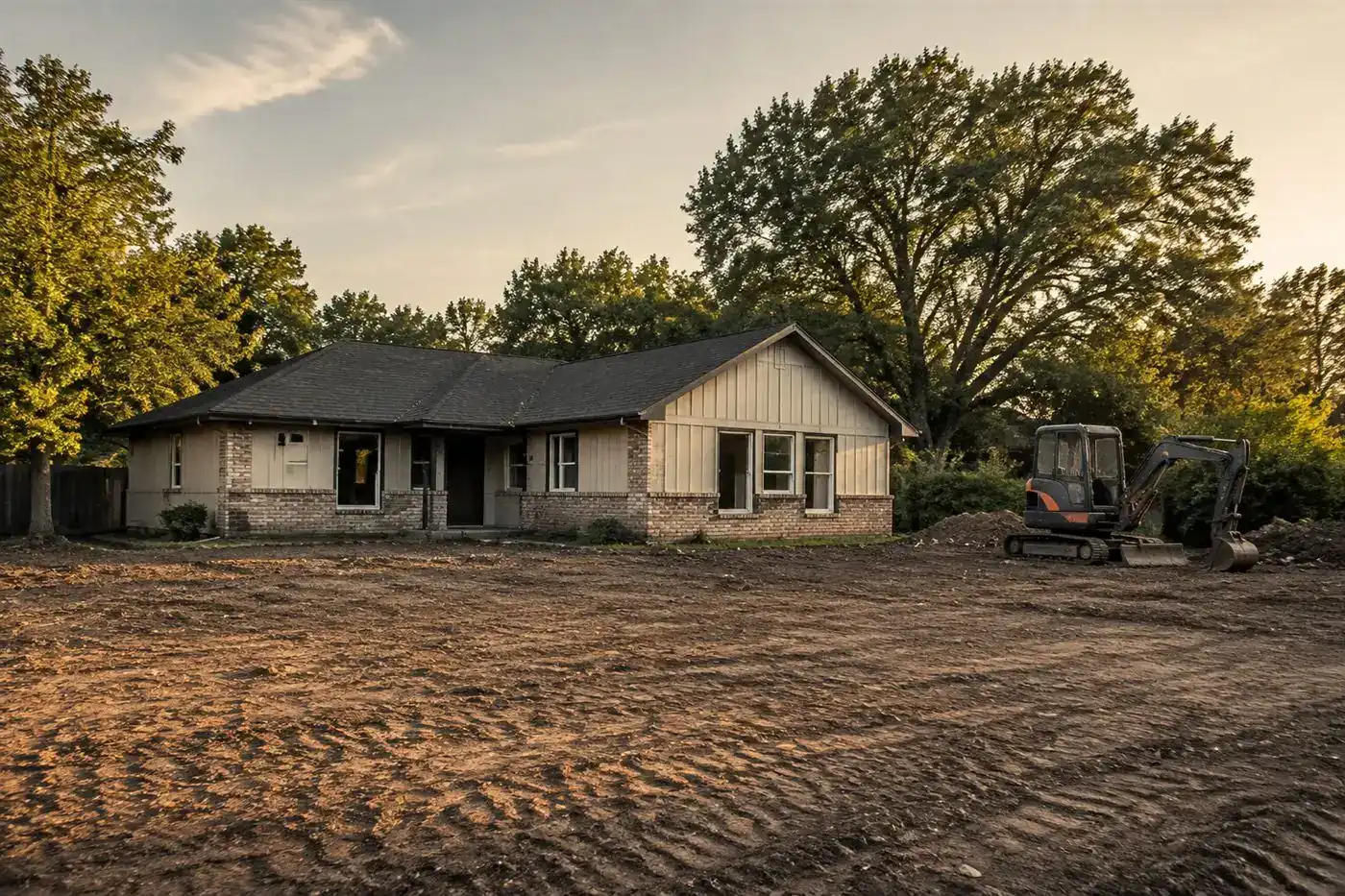
Overgrown lots can become difficult to inspect, access, or build on. In Dallas, a property may have thick brush, cedar, mesquite, volunteer trees, old fence lines, buried debris, uneven ground, or vegetation growing through areas where a driveway, home, shop, or commercial improvement is planned.
DALLAS SERVICE GUIDEScope planning
 Define the handoffScope · access · next phase
Services in this guide
What land clearing includes
“Land clearing” is not one identical service on every property. A useful estimate should identify exactly what is being removed and what condition the site will be left in.
Cutting or removing unwanted trees
Forestry mulching, which grinds vegetation in place
Cutting, stacking, loading, and hauling logs and brush
Grinding or excavating stumps
Removing fallen trees and storm debris
Clearing fence lines, driveway corridors, and utility paths
Removing surface debris that interferes with access
Preparing a defined area for later grading or excavation
Common clearing tasks include: Clearing can be selective or complete. Selective clearing leaves chosen trees, shade areas, property buffers, or natural drainage features in place. Complete clearing removes most vegetation from the defined work area, but it still should not be assumed that every tree, stump, or buried obstruction can be removed without reviewing the site.
The decision point
Dallas conditions can change the work
North Texas properties do not all have the same soil, vegetation, access, or development constraints. Dallas-area clearing projects may involve heavy clay, rocky areas, limestone, mature shade trees, cedar, mesquite, hackberry, invasive brush, or creek-side growth.
Urban and suburban lots create different challenges from rural acreage. A machine may need to work beside a house, sidewalk, retaining wall, pool, fence, road, or neighboring property. There may be limited room to stage equipment or load debris. Noise, dust, traffic, and working hours may also matter more when homes are close together.
The decision point
Forestry mulching versus cut-and-haul
Forestry mulching uses a specialized attachment to cut and grind vegetation where it stands. The resulting mulch is spread across the work area. This can be useful when the goal is to open up acreage, improve visibility, create access lanes, reduce undergrowth, or manage vegetation without loading every branch onto trucks.
Mulching is not automatically the best choice. It may not provide the right finish for a building pad, foundation area, drainage installation, or landscape plan. Large trunks, heavy stumps, buried debris, and material that must leave the property may require additional equipment and disposal.
Cut-and-haul work involves cutting vegetation, processing or stacking it, loading it, and transporting it away. This is often appropriate when the owner wants a cleaner site, when the material cannot remain on the ground, or when the next contractor needs open space for construction.
Grubbing goes further than simply cutting vegetation. It may include removing root balls, stumps, and other below-ground obstructions. If a future building, driveway, pool, utility trench, or septic area will occupy the clearing zone, ask whether stump removal and below-grade cleanup are included.
The important question is not “Which method is cheapest?” It is “What condition does the site need to be in when the clearing crew leaves?”
The decision point
Residential lot and acreage clearing
Homeowners commonly request clearing for a new build, a driveway, a shop, a barn, a fence, a backyard improvement, or better access to neglected acreage.
If the property is being prepared for a house, clearing should be coordinated with the builder, surveyor, excavator, and grading contractor. Driveways, construction access, utility routes, drainage features, and temporary staging areas may also need to be considered.
For larger acreage, the owner may want selective clearing rather than a completely bare property. Mark the trees, boundaries, trails, views, pasture areas, and no-work zones before equipment arrives.
The decision point
Tree preservation and Dallas approvals
Dallas has tree-conservation rules that may affect the removal or serious injury of protected trees. Requirements can depend on the property, the tree, development activity, and the applicable approval process. Do not assume that a land-clearing contractor can remove every tree simply because the owner requests it.
Before work begins, confirm whether the property is inside Dallas city limits and whether current city requirements apply. Ask who is responsible for checking tree-removal approvals, building permits, overlays, or other site-specific restrictions. If the property is in another municipality, that city’s rules may be different.
The decision point
Utilities, fences, drainage, and hidden obstacles
Land clearing can expose hazards that were not visible during an initial drive-by. Old fence wire can wrap around equipment. Buried concrete, discarded appliances, tanks, or construction debris can change the scope. Utility lines may cross a proposed driveway or clearing corridor.
Texas811 recommends contacting the service before digging so participating utility operators can mark underground lines. A locate is not a substitute for careful excavation, private utility locating, or reviewing property records, but it is an important part of planning work that may disturb the ground.
Tell the contractor about wells, septic systems, irrigation, private electric lines, gas lines, drainage structures, ponds, and buried improvements. Also identify property corners and boundary lines. Clearing beyond the property line can create a serious dispute even when the vegetation appears continuous.
Drainage deserves attention as well. Removing vegetation or changing the surface can affect how water moves. Clearing alone is not drainage design, grading, or erosion-control installation. If the property has a creek, ditch, floodplain, steep slope, or recurring standing water, bring that information into the planning conversation.
Before you approve the work
What should be included in a Dallas land-clearing estimate?
A useful written estimate should describe more than “clear one acre.” Look for:
01
Address or clearly marked work area
02
Approximate acreage or square footage
03
Vegetation and tree size
04
Selective or complete clearing
05
Trees to remain
06
Stump and root removal
07
Mulching, stacking, burning, or haul-off plan
08
Disposal fees and truck quantities
09
Fence, debris, or concrete removal
10
Equipment access requirements
11
Surface finish and cleanup standard
12
Items specifically excluded
13
Expected schedule and weather assumptions
Confirm the current rule
Online cost ranges can help with early budgeting, but they cannot replace a site-specific assessment. Density, access, disposal, and the required finish can change the price substantially. Be cautious about any quote that gives a precise number without asking what is on the property or what you need to happen next.
The decision point
What happens after clearing?
After vegetation is removed, the next step may be rough grading, pad preparation, driveway construction, drainage work, utility installation, or foundation excavation. Those are separate scopes and should be coordinated rather than assumed.
Ask the clearing contractor what they mean by “clean,” “ready,” or “complete.” A site may look open while still containing stumps, roots, soft areas, buried debris, or rough ground that requires additional work.
If you are building, give the clearing estimate and site plan to the next contractor before work begins. That allows the grading or excavation team to identify remaining requirements and reduces the chance of paying twice to move the same material.
Common questions
Frequently asked questions
Clear answers for the first planning conversation, kept visible so the important context is never hidden behind a click.
Can forestry mulching prepare my lot for a house?
Sometimes it can help open the property, but mulching alone does not guarantee a construction-ready building area. The house footprint may still need grubbing, grading, soil preparation, utility work, and foundation excavation.
Is stump removal included in land clearing?
Not always. Some clearing scopes cut trees and mulch or haul the visible material while leaving stumps. Confirm whether stumps will be ground, excavated, backfilled, or left in designated areas.
Do I need permission to remove trees in Dallas?
Possibly. Dallas tree-conservation requirements can apply to protected trees and certain properties. Verify the current requirements before authorizing removal.
Can you clear only part of a property?
Yes. Selective clearing is common for homesites, driveways, fence lines, trails, pasture areas, and views. Mark the work zone and trees that must remain.
How do I get an accurate estimate?
Provide the property address, approximate area, intended use, photos or video, access information, trees to preserve, and your preferred debris plan. A site visit is especially important for dense vegetation, stumps, structures, slopes, or limited access. For a Dallas land-clearing estimate, describe what you want the property to be ready for—not just how many acres you want cleared. That gives the contractor enough information to recommend the right clearing method, identify likely exclusions, and coordinate the work with the next phase of your project.
Local context
What is specific
to this place?
LOCAL CONTEXT
Local context — Dallas, Texas This land clearing page is localized to Dallas. The relevant local variables are the exact municipality, property conditions, public right-of-way involvement, utility ownership, nearby structures, trees, drainage, floodplain status, environmental conditions, inspection sequence, and disposal rules. The page’s land clearing Dallas TX guidance must be checked against current requirements for the address; surrounding DFW municipalities may use different processes.
Confirm current requirements for the specific property before work begins.Scope clarity
Know what the estimate is actually saying.
Use these boundaries to compare proposals on the same basis and confirm the final handoff.
What the working scope covers
- Land clearing may include removing or mulching tall grass, brush, vines, unwanted trees, fallen vegetation, fence-line growth, stumps, and surface debris within the defined work area, along with cutting, stacking, loading, hauling, chipping, grinding, or cleanup when those items are included in the written proposal. The scope should state the clearing limits, vegetation types, tree and stump treatment, access route, disposal method, retained features, and required handoff.
What needs its own line item
- A land-clearing price may exclude tree-risk assessment or arborist work, protected or permit-required tree removal, demolition, hazardous-material handling, utility locating or disconnection, engineering, surveying, permits and municipal fees, right-of-way or traffic control, rock excavation, buried debris, contaminated soil, stump excavation beyond the stated size, export haul-off, grading, drainage, erosion control, imported fill, compaction, paving, landscaping, and restoration unless expressly included. Removing vegetation does not automatically create a graded or construction-ready site.
Conditions behind the plan
- The exact property and jurisdiction, clearing limits, vegetation and tree inventory, protected or retained features, stump sizes, fences and structures, utilities, access, slopes, drainage, soil and buried conditions, mulch or haul-off destination, weather, erosion controls, permit requirements, and intended next use must be verified before a binding proposal. Forestry mulching, cut-and-haul clearing, stump removal, grading, drainage, and build-site preparation are separate stages unless the written scope combines them.
Reference desk
Sources behind this guide.
Official references and project-specific starting points used to frame the page.
- 01
Dallas Building Inspection code directory — https://dallascityhall.com/departments/sustainabledevelopment/buildinginspection/Pages/code_directory.aspx
- 02
DallasNow permitting — https://dallascityhall.com/departments/sustainabledevelopment/Pages/DallasNow.aspx
- 03
Dallas right-of-way management — https://dallascityhall.com/departments/public-works/Pages/right-of-way-management.aspx
- 04
Texas811 utility locate guidance — https://www.texas811.org/
- 05
EPA asbestos guidance — https://www.epa.gov/asbestos
Next step
Ready to describe
the site?
Send the address, photos, access notes, project limits, and what should happen after the work is complete.
Request a Dallas land clearing estimate
Planning guidance is not a binding quote. Complex conditions receive human review.
Open project intake →